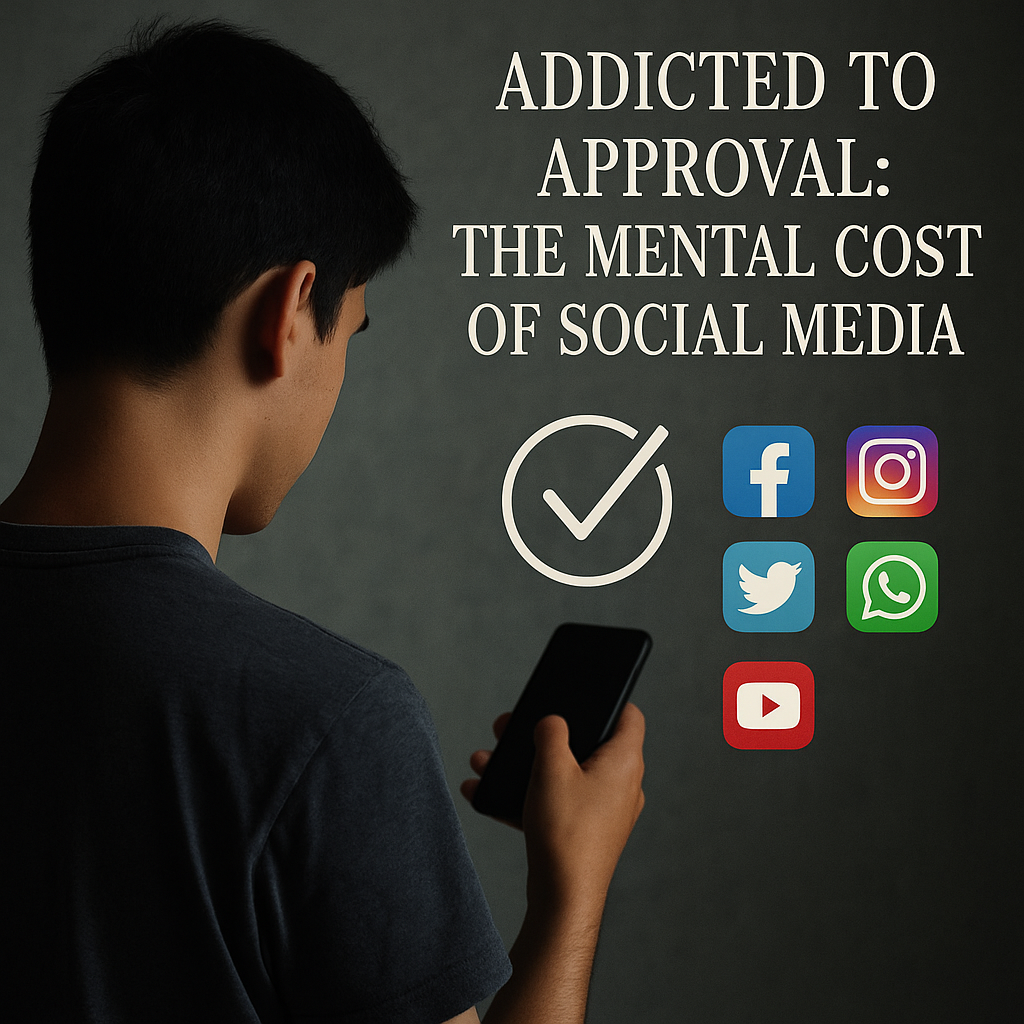
In a world increasingly defined by virtual interactions, social media has emerged as a powerful tool shaping how we connect, communicate, and consume information. It began with noble intentions to bring people closer, to make the distant feel near, and to democratize voices that once remained unheard. But as time has passed, the sheen of this digital revolution has begun to fade, revealing a more unsettling reality. Beneath the surface of curated feeds and instant messages lies a complex web of psychological, emotional, and social consequences that often go unnoticed or unspoken.
One of the most troubling aspects of social media is the way it influences self-perception. Platforms built around likes, shares, and followers subtly encourage a form of validation-seeking that can erode individual confidence. Users are often caught in an endless loop of comparison, measuring their worth against the filtered moments of others’ lives. A person’s vacation, appearance, career success, or romantic relationship becomes a benchmark unrealistic and often unattainable. This persistent comparison not only fosters insecurity but also diminishes gratitude for one’s own life, which now seems dull in contrast to the perfection constantly on display.
Another less obvious danger lies in the illusion of connection. While social media allows people to stay in touch across time zones and continents, it can also lead to emotional disconnection. Quick replies and heart emojis replace meaningful conversations. The depth of relationships often becomes shallow, with the frequency of interaction mistaken for closeness. In many ways, the more we connect online, the lonelier we can feel offline. People begin to substitute digital presence for physical and emotional intimacy, unaware of how this shift slowly hollows out genuine connection.
The role of social media in shaping our thoughts and behaviors is equally significant. Algorithms designed to keep users engaged often prioritize content that is emotionally charged especially that which provokes outrage, fear, or sensational curiosity. As a result, social platforms can become echo chambers that reinforce specific views while drowning out differing perspectives. This not only hampers critical thinking but also fosters division, misinformation, and in some cases, hostility among users who might never speak to each other in person.
Mental health professionals have also observed a worrying trend: increased rates of anxiety, depression, and sleep disorders among frequent users of social media, especially adolescents and young adults. The constant barrage of information, the pressure to maintain an appealing digital persona, and the fear of missing out can take a toll on mental well-being. Even moments of rest are disrupted by the compulsion to check notifications or respond to messages. In a culture that values being “always online,” rest becomes guilt-ridden, and silence becomes uncomfortable.
Perhaps the most profound cost of excessive social media use is the loss of presence. We capture moments to post them, not to feel them. We view life through a screen even as it unfolds right in front of us. The sunset is photographed, not admired. Meals are shared with the world before being tasted. This constant need to document dilutes the richness of experience itself, reducing real life to a performance for a digital audience.
Yet, it’s important to recognize that social media itself is not inherently harmful. It is a tool neutral at its core but its impact depends on how it is used. The problem arises when we lose control over that usage, when habits form silently and start shaping how we think, feel, and relate to others. Awareness is the first step toward reclaiming our time, our attention, and our emotional space from the grip of endless scrolling.
As society continues to navigate this complex digital age, the challenge is not to abandon social media altogether, but to approach it with intention. To question how it shapes our lives and to find balance between the virtual and the real. Because behind every screen is a human being craving connection, meaning, and peace and these cannot be found in pixels alone.
Mr. Azad hit the nail on the head with his thought-provoking article.